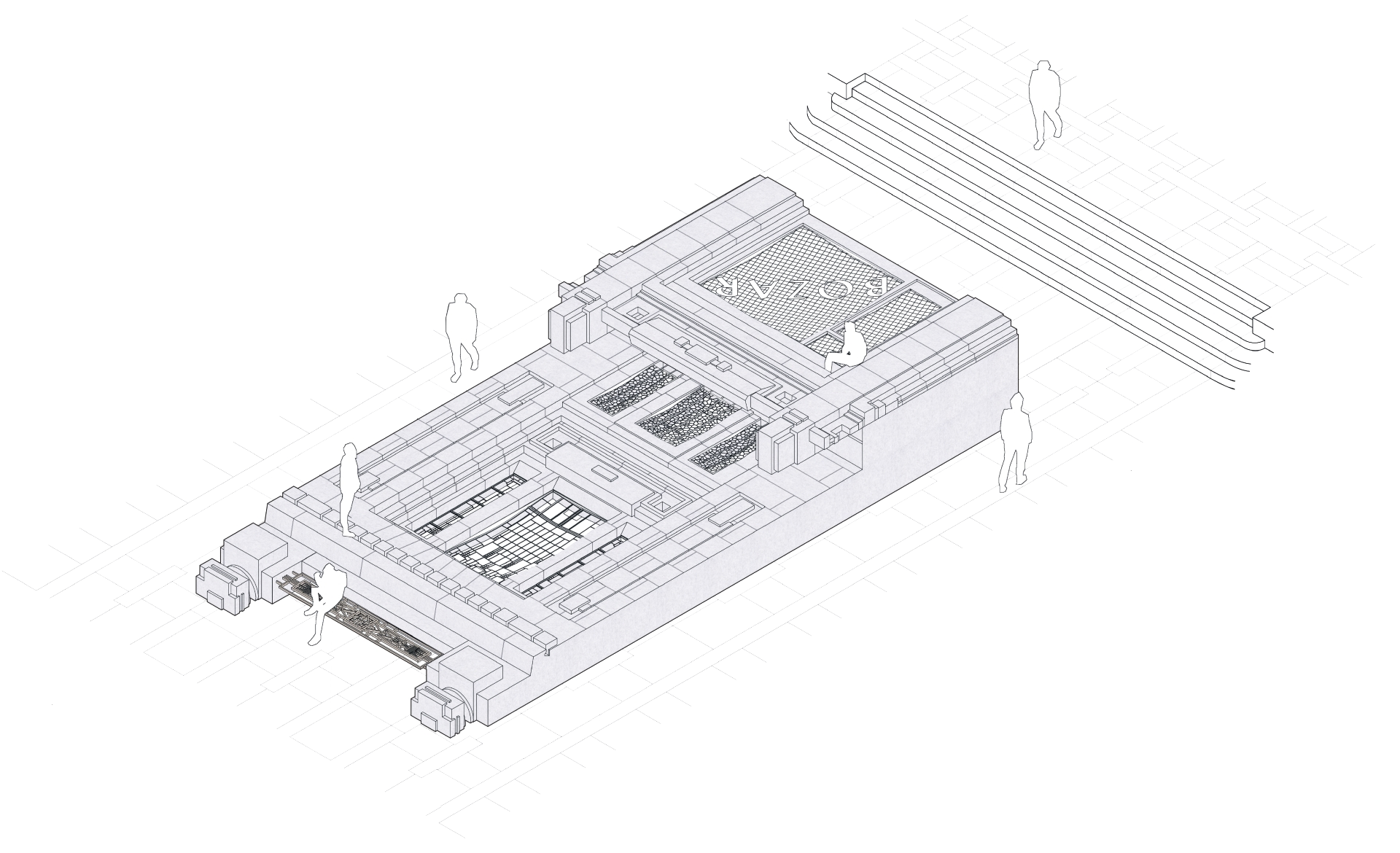
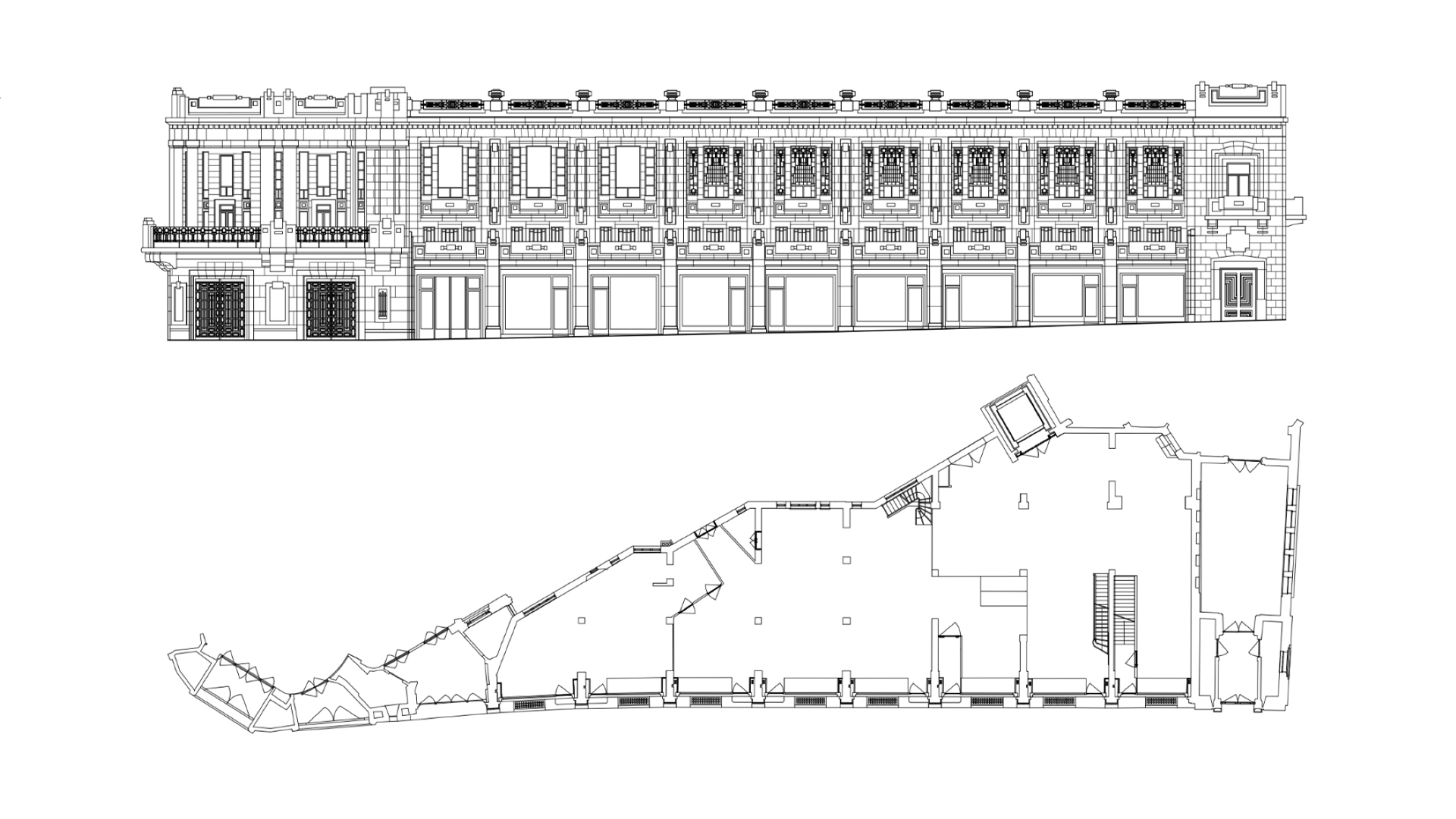
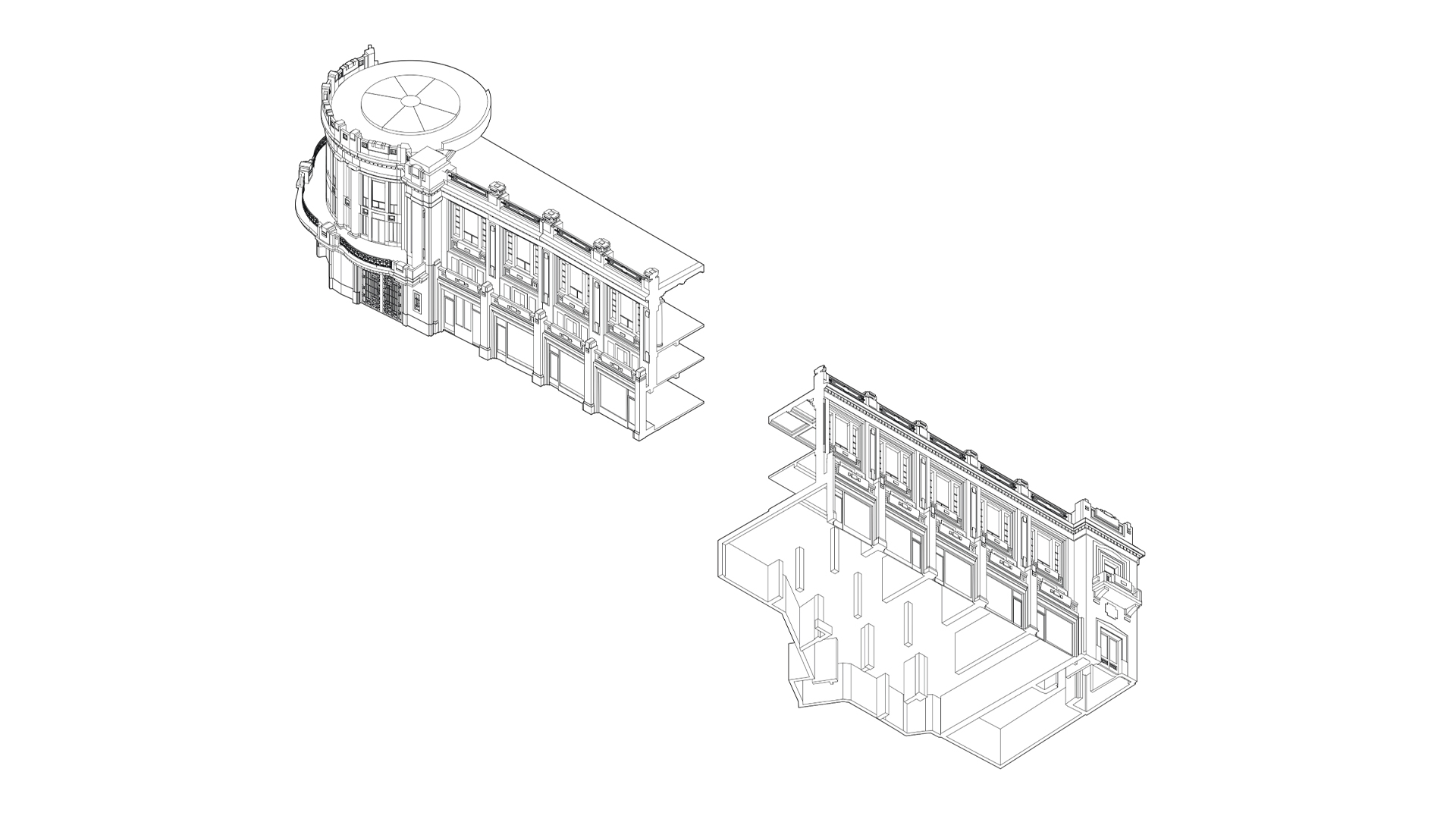
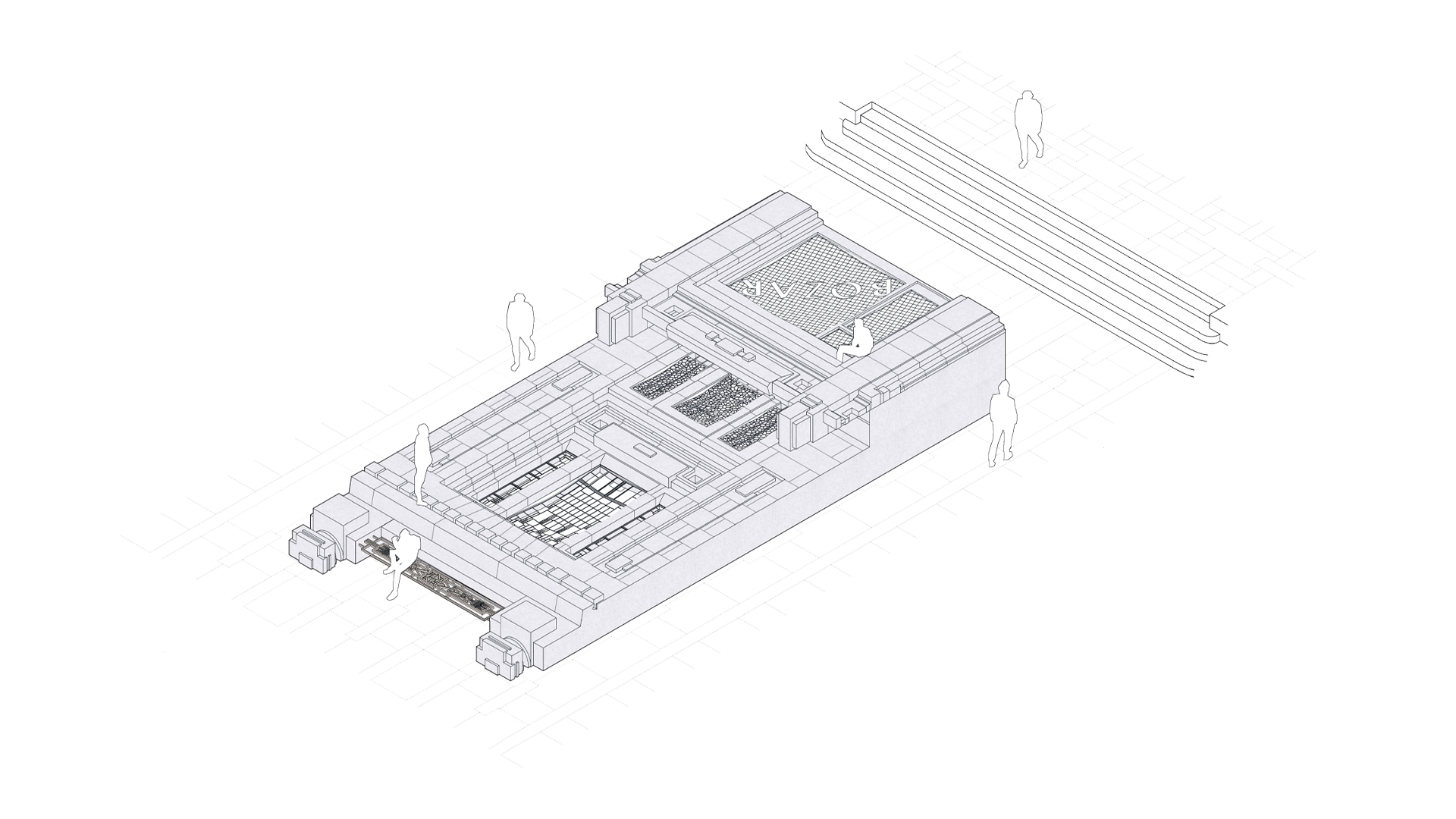
As part of an elective, the BOZAR (Victor Horta, 1928) was analysed by a variety of student groups. The assignment for my group was to analyse the Ravensteinfaçade both collectively and individually. These analyses would be used to design a pavilion, located in the Horta Hall of the BOZAR. The other individual analyses are excluded, but mine can be seen in the first drawing, in which the façade and floor plan were analysed and drawn. The group analysis consists of a 3D analysis of the relation between the interior and exterior, drawn in the style of Auguste Choisy. Lastly, the pavilion design was inspired by the archetype; the most frequently repeated part of the façade. By taking this 1:1 section out of its ensemble and laying it on its interior side in the centre of the hall, whilst making it accessible to walk and sit on, the façade can be experienced in a new and exciting way. Instead of its original materials, it is covered with felt tapestry tiles in the colour of the stone cladding, making it touchable and soft. The windows are filled with a suspended netting to function as a hammock, which is woven in the pattern of the stained glass.